
A food parcel solves tonight. It does not solve next month’s rent or next term’s school fees. For widows, the real question is what happens when the help stops.
The problem is bigger than grief
There are an estimated 258 million widows worldwide, and nearly one in ten live in extreme poverty. Many are also denied access to inheritance, bank accounts and credit. In Nigeria, customary inheritance rules can leave widows at risk of losing their homes and livelihoods. Much of a widow’s poverty is created after her husband’s death, by rules and relatives.
Why assistance alone falls short
Relief meets urgent need, and it must continue where a crisis is real. But on its own it leaves a woman dependent on the next donor and overlooks what she already has: resilience, responsibility and often a skill worth building on.
The EmpowerHer Future approach
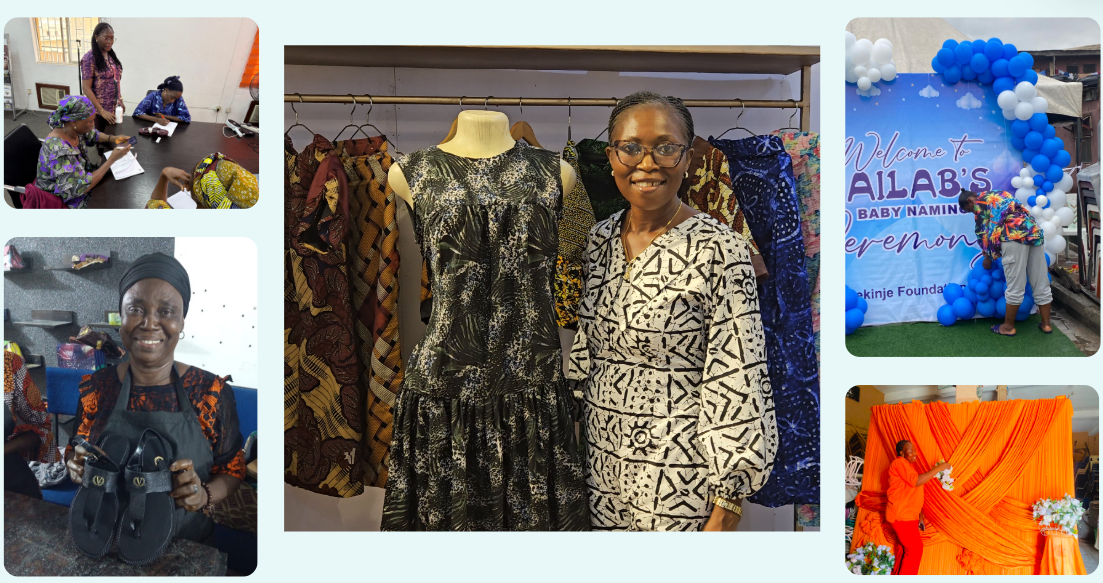
Ese-Tonia Foundation’s EmpowerHer Future programme starts from a different premise: a widow should leave with an income and a place in the market, not just a certificate.
Cohort A began with Air Force widows in Ikeja, training across six trades. The current cohort moves into a faith-based community, with tracks in tailoring and fashion design, baking and catering, shoemaking and bag making, and drop shipping and wholesale trading, all chosen for real market demand.
Training is only the first stage. The programme adds:
- Stipends and materials, so women can learn without choosing between class and income.
- A Business Development Series on business planning, pricing, recordkeeping, product photography and social media branding.
- An internship phase to practise the trade before working alone.
- Regular check-in calls, so support continues after the classroom.
From trainee to trainer, from trainee to owner
The end goal is independence. Graduates will be developed into trainers of trainers, equipped to pass their skills on and empower other widows. The programme grows through the women it has already changed.
We will also help them establish themselves. Some will be set up in businesses of their own, with the support to start. Others will be placed under established businesses, where they can keep learning while they earn. Both routes lead to the same place: women who stand on their own.
This mirrors what research shows works. BRAC’s Graduation model pairs training, assets, savings and coaching, and raised the earnings of the poorest women by an average of 38 percent four years after the asset transfer. The package matters more than any single piece.
The ripple effect
When a widow earns, children stay in school, meals become regular and housing is safer. When she trains another woman, that benefit multiplies. Economic empowerment is a family and community investment, not a welfare line item.
Beyond, not instead of
Relief still matters. The real choice is between help that ends and help that leaves something behind.
You can be part of what is left behind. Commission a widow-owned business. Host a graduate as an apprentice. Sponsor a cohort. Every widow deserves the tools, the capital and the customers to prove she is an entrepreneur in the making.